
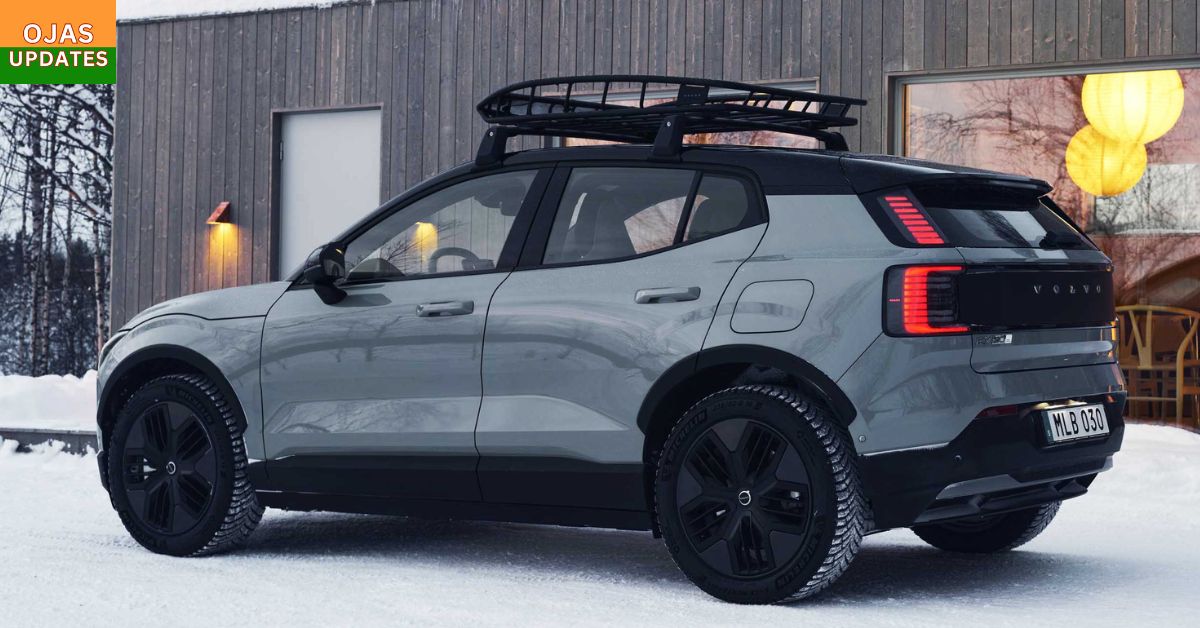
It has been a wild, roller-coaster ride for Volvo’s smallest electric vehicle, the EX30. When the Swedish automaker initially announced the subcompact crossover, it looked poised to completely disrupt the electric car market. With a promised, eye-popping starting price of roughly $35,000, jaw-dropping 0–60 mph acceleration times, and hyper-minimalist Scandinavian styling, the EX30 was heralded as the affordable EV the masses had been begging for.
However, the real world had other plans. Geopolitical tensions, massive tariff hikes that bloated the car’s real-world price tag by nearly $10,000, and highly publicized software bugs ultimately forced Volvo to drastically change its strategy.
Just a couple of months after confirming that the EX30 will be officially retired from its US lineup, Luis Rezende, President of Volvo Cars America, dropped a major bombshell. Volvo isn’t abandoning the affordable EV market—instead, they are building a direct replacement.
Bigger, Bolder, and Built for the Real World
While specific model names are still under wraps, Rezende confirmed that the upcoming entry-level electric SUV will address the biggest critique aimed at the outgoing EX30: its pint-sized proportions.
The original EX30 was undeniably charming, but it was small—frequently pushing the boundaries of what family-oriented buyers considered practical. The new vehicle will expand its footprint, offering a much more versatile cabin space, improved rear passenger headroom, and increased boot capacity without turning into a bloated, oversized highway cruiser.
Pricing: Keeping the Affordable Dream Alive
When a manufacturer discontinues an affordable car because of financial factors, the successor is usually much more expensive. Surprisingly, Volvo claims it wants to hold the line on pricing.
How the Evolving Lineup Compares
| Feature | Outgoing EX30 | Upcoming Successor (Est.) |
| Target Price Range | ~$35,000 – $44,900 | ~$38,000 – $45,000 |
| Cabin Space Focus | Ultra-compact / Minimalist | Expanded rear legroom & storage |
| Driving Dynamics | Rocket-ship straight-line speed | Agility and driver engagement |
| Software Baseline | Early Android Automotive | Next-gen, bug-free OS architecture |
“We’re going to have a new car coming, that will fulfill not exactly the same price point, but very similar,” Rezende told reporters. The goal is to capture the budget-conscious premium buyer who wants a luxury electric vehicle experience without having to stretch their finances into the $55,000+ territory of larger SUVs.
Lessons Learned: Erasing the Software Demons
It is no secret that Volvo went through a turbulent phase with the launches of both the EX30 and the flagship EX90. Both vehicles suffered from severe software delays and early glitchy interfaces that left some early adopters frustrated.
Volvo’s engineering teams are treating the EX30’s successor as a clean slate. The new vehicle will benefit directly from the development of the recently unveiled Volvo EX60. This means it is highly likely to adapt Volvo’s highly advanced, upcoming SPA3 software-defined architecture.
“We cannot hide from the situation that we had,” product managers candidly admitted regarding past software bugs. “But we have learned tremendously much… we are very confident in delivering rock-solid stability going forward.”
By focusing on centralized computing and robust over-the-air (OTA) update paths, the new EV promises an incredibly fast, modern infotainment system—potentially utilizing newly integrated Google Gemini AI assistant tech—minus the frustrating glitches.
“I Promise You, It Will Be Fun to Drive”
While the original EX30 was famous for its terrifyingly quick, straight-line Twin Motor performance (blasting to 60 mph in a mere 3.4 seconds), it wasn’t exactly a handling scalpel. For the replacement vehicle, Volvo is shifting focus toward driver engagement and agility.
By utilizing a slightly longer wheelbase and an optimized battery layout, engineers are aimimg to deliver a low center of gravity combined with dynamic, predictable suspension tuning. It won’t just be quick at a stoplight; it will feel genuinely engaging on a winding canyon road.
The Verdict
The cancellation of the EX30 was a disappointing blow to EV adoption, but its successor feels like exactly what the market actually needs. Instead of a compromised, ultra-tight micro-SUV plagued by geopolitical tariff issues, Volvo is preparing a mature, spacious, and mechanically refined alternative.
With a scheduled rollout targeting the near future, the Swedish brand is proving that making affordable electric cars doesn’t mean sacrificing the utility and driving joy that people buy SUVs for in the first place.