
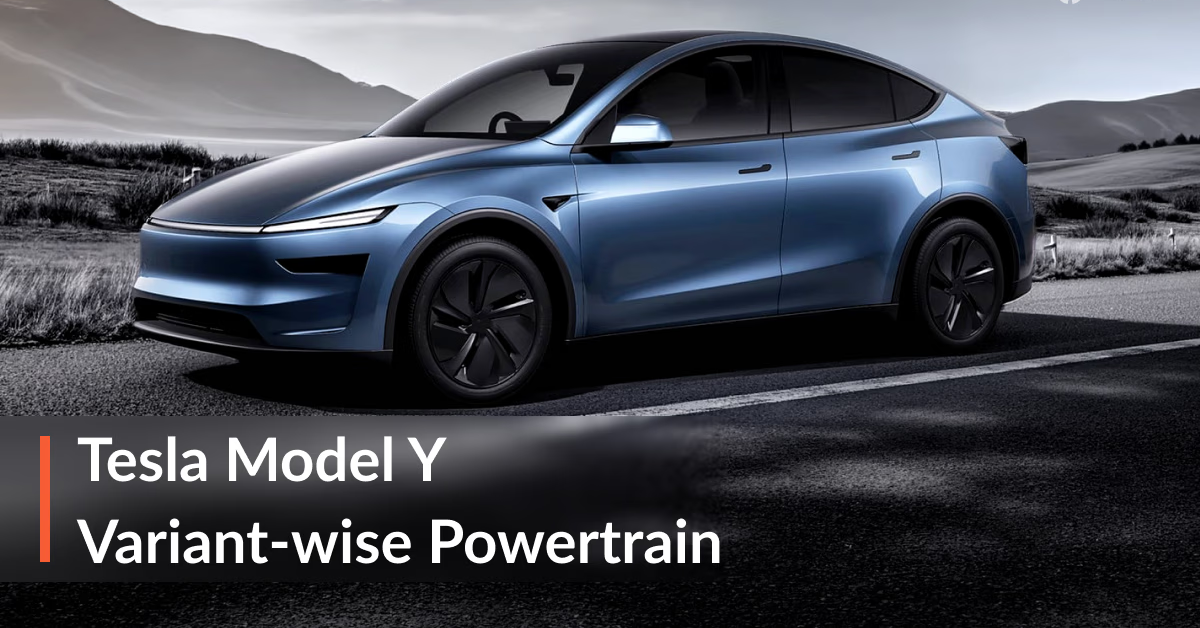
The Tesla Model Y has become one of the world’s most popular premium electric SUVs thanks to its futuristic technology, minimalist luxury design, intelligent software ecosystem, and powerful electric performance. However, one area that often confuses buyers is Tesla’s powertrain lineup.
Unlike traditional petrol or diesel SUVs where engine choices are relatively straightforward, Tesla uses multiple electric drivetrain configurations that dramatically change the vehicle’s performance, driving range, efficiency, and overall ownership experience.
Buyers often hear terms like:
- RWD
- Long Range
- Dual Motor AWD
- Performance AWD
- Battery configurations
- Regenerative braking systems
but many people still don’t fully understand how these powertrain setups differ from one another.
Choosing the correct powertrain is extremely important because it affects:
- Driving experience
- Charging frequency
- Highway usability
- Acceleration performance
- Winter and rain traction
- Ownership cost
- Long-term practicality
In this detailed guide, we explain every Tesla Model Y powertrain option in simple language so buyers can clearly understand which variant makes the most sense for their lifestyle and budget in 2026.
Understanding What a Powertrain Means in an EV
In traditional vehicles, the powertrain usually refers to:
- Engine
- Transmission
- Drivetrain setup
In an electric vehicle like the Tesla Model Y, the powertrain mainly includes:
- Electric motor setup
- Battery pack
- Drivetrain configuration
- Power delivery system
- Energy management software
Since electric vehicles do not use conventional petrol engines or multi-speed gearboxes, their driving behavior feels very different from traditional SUVs.
Tesla’s Core Powertrain Philosophy
Tesla designs its powertrains around three major goals:
- Maximum efficiency
- Instant performance
- Intelligent energy management
Unlike many traditional automakers, Tesla heavily integrates software into the driving experience.
This means:
- Power delivery is software-optimized
- Battery performance evolves through updates
- Regenerative braking adapts dynamically
- Driving efficiency improves continuously
This software-focused engineering is one of Tesla’s biggest advantages.
Tesla Model Y Rear-Wheel Drive (RWD) Explained
The Rear-Wheel Drive version is usually the entry-level Tesla Model Y powertrain.
This setup uses:
- A single electric motor
- Rear-wheel power delivery
- Smaller or efficiency-focused battery setup
The RWD version mainly prioritizes:
- Better efficiency
- Lower ownership cost
- Daily usability
- Urban practicality
How RWD Works in the Model Y
In the RWD setup:
- Power is sent only to the rear wheels
- The front wheels focus mainly on steering
- Energy consumption remains lower
Because there is only one motor instead of two, the vehicle becomes:
- Lighter
- More efficient
- Less expensive
This helps improve driving range and affordability.
Advantages of the RWD Powertrain
Key Benefits Include:
- Better battery efficiency
- Lower purchase price
- Simpler drivetrain setup
- Strong daily usability
- Smooth city driving
The instant torque delivery still feels extremely quick compared to traditional petrol SUVs.
Who Should Buy the RWD Variant?
The RWD version is ideal for buyers who:
- Mainly drive in cities
- Prioritize efficiency
- Want lower running cost
- Need practical daily commuting
- Are entering premium EV ownership for the first time
For urban users, the RWD setup often provides more than enough performance.
Tesla Model Y Long Range Powertrain Explained
The Long Range variant focuses heavily on maximizing battery range and highway usability.
This version usually includes:
- Larger battery pack
- Better energy optimization
- Improved long-distance capability
The Long Range setup appeals strongly to buyers regularly traveling between cities.
Why Long Range Variants Matter
Driving range remains one of the most important concerns for EV buyers.
Long Range variants reduce:
- Charging anxiety
- Frequent charging stops
- Long-distance travel limitations
For highway users, this makes a massive difference in overall ownership convenience.
Battery Technology in Long Range Models
Tesla’s larger battery packs offer several advantages:
- Increased usable capacity
- Better highway endurance
- Improved travel confidence
- Enhanced real-world flexibility
The vehicle can comfortably handle longer journeys without constant charging concerns.
Charging Advantages
The Long Range variant also benefits from:
- Faster charging optimization
- Better thermal management
- Improved charging consistency
These factors become extremely important during long-distance travel.
Tesla Model Y Dual Motor AWD Explained
The Dual Motor All-Wheel Drive setup is one of Tesla’s most popular powertrain configurations globally.
This setup uses:
- One electric motor at the front
- One electric motor at the rear
- Intelligent power distribution
The AWD system significantly changes how the SUV drives.
How Dual Motor AWD Works
Unlike mechanical AWD systems in traditional SUVs, Tesla’s AWD uses software-controlled electric motors.
This allows:
- Instant torque balancing
- Smarter traction management
- Faster response times
- Better energy optimization
The vehicle continuously adjusts power distribution based on driving conditions.
Advantages of AWD
Major Benefits Include:
- Better acceleration
- Improved wet-road traction
- Stronger highway stability
- Enhanced cornering confidence
- Superior hill-driving capability
The SUV feels more planted and stable at higher speeds.
AWD Performance Feels Dramatically Different
Compared to RWD versions, AWD variants deliver:
- Faster throttle response
- More aggressive acceleration
- Better traction during launches
- Improved overtaking confidence
The driving experience feels significantly more powerful.
Who Should Choose AWD?
The AWD setup is ideal for buyers wanting:
- Premium performance
- Long-distance usability
- Better traction
- More confidence during difficult road conditions
This powertrain usually offers the best overall balance between practicality and performance.
Tesla Model Y Performance AWD Explained
The Performance AWD is the most aggressive and sport-focused powertrain in the lineup.
This version prioritizes:
- Maximum acceleration
- Sports-car-like performance
- Sharper driving dynamics
It transforms the Model Y into a high-performance electric SUV.
What Makes the Performance Variant Different?
The Performance setup includes:
- Higher-output electric motors
- Aggressive power calibration
- Performance-focused software tuning
- Faster acceleration mapping
The result is explosive acceleration performance.
Instant Electric Torque
One of Tesla’s biggest advantages is instant torque delivery.
Unlike petrol engines that build power gradually, electric motors deliver maximum torque almost instantly.
This allows the Performance Model Y to feel extremely fast during:
- Traffic overtakes
- Highway acceleration
- Launches from standstill
The acceleration experience feels dramatic and addictive.
Performance Suspension and Chassis Tuning
The Performance variant may also include:
- Sportier suspension setup
- Larger performance wheels
- Performance brakes
- Sharper handling calibration
The SUV feels more athletic during aggressive driving.
Battery Efficiency vs Performance
Higher-performance variants usually consume more energy.
This means:
- Faster acceleration may reduce range
- Larger wheels affect efficiency
- Aggressive driving increases consumption
Buyers should understand that performance and efficiency rarely coexist equally.
Regenerative Braking Explained
All Tesla Model Y variants use regenerative braking technology.
This system converts braking energy back into battery power.
Benefits of Regenerative Braking
Advantages include:
- Improved efficiency
- Extended driving range
- Reduced brake wear
- One-pedal driving capability
Tesla’s regenerative braking system is among the smoothest in the EV industry.
Battery Management Systems
Tesla’s advanced battery management software continuously monitors:
- Temperature
- Charging speed
- Energy usage
- Power delivery
This improves both:
- Battery lifespan
- Performance consistency
The intelligent software integration is a major reason Tesla vehicles perform efficiently.
Real-World Driving Differences Between Variants
RWD Variants Feel:
- Smooth
- Efficient
- Comfortable
- Urban-friendly
AWD Variants Feel:
- More powerful
- More stable
- Faster
- Better balanced
Performance Variants Feel:
- Extremely aggressive
- Sports-car-like
- Highly responsive
- Driver-focused
Each setup targets different buyer priorities.
Which Powertrain Offers Best Value?
The answer depends entirely on usage patterns.
Best for Daily City Driving
RWD Variant
Ideal for:
- Efficiency-focused buyers
- Urban commuting
- Lower ownership cost
Best Overall Balance
Long Range AWD
Perfect for:
- Highway users
- Family buyers
- Long-distance travel
- Balanced luxury performance
This is often the smartest overall choice.
Best for Enthusiasts
Performance AWD
Ideal for buyers wanting:
- Maximum acceleration
- Premium driving excitement
- Sports-focused EV experience
Ownership Cost Differences
Higher powertrain variants increase:
- Purchase cost
- Insurance premiums
- Tire wear
- Financing burden
However, they also provide:
- Better performance
- Enhanced practicality
- Superior driving confidence
Buyers should carefully balance needs against long-term affordability.
Final Verdict
The Tesla Model Y lineup offers one of the most sophisticated electric SUV powertrain ranges available in 2026.
From the efficiency-focused Rear-Wheel Drive setup to the highly capable Long Range AWD and the thrilling Performance AWD version, each powertrain configuration delivers a distinct ownership experience.
The RWD variants prioritize efficiency and affordability, making them excellent for city-focused buyers. The Long Range AWD remains the most balanced option thanks to its combination of driving range, practicality, traction, and performance. Meanwhile, the Performance AWD transforms the Model Y into a genuinely exciting high-performance electric SUV.
Understanding these powertrain differences is extremely important before purchasing because the right setup can dramatically improve long-term ownership satisfaction.
For buyers entering the premium EV segment, choosing the correct Tesla Model Y powertrain ultimately depends on lifestyle, driving habits, travel needs, and performance expectations.