
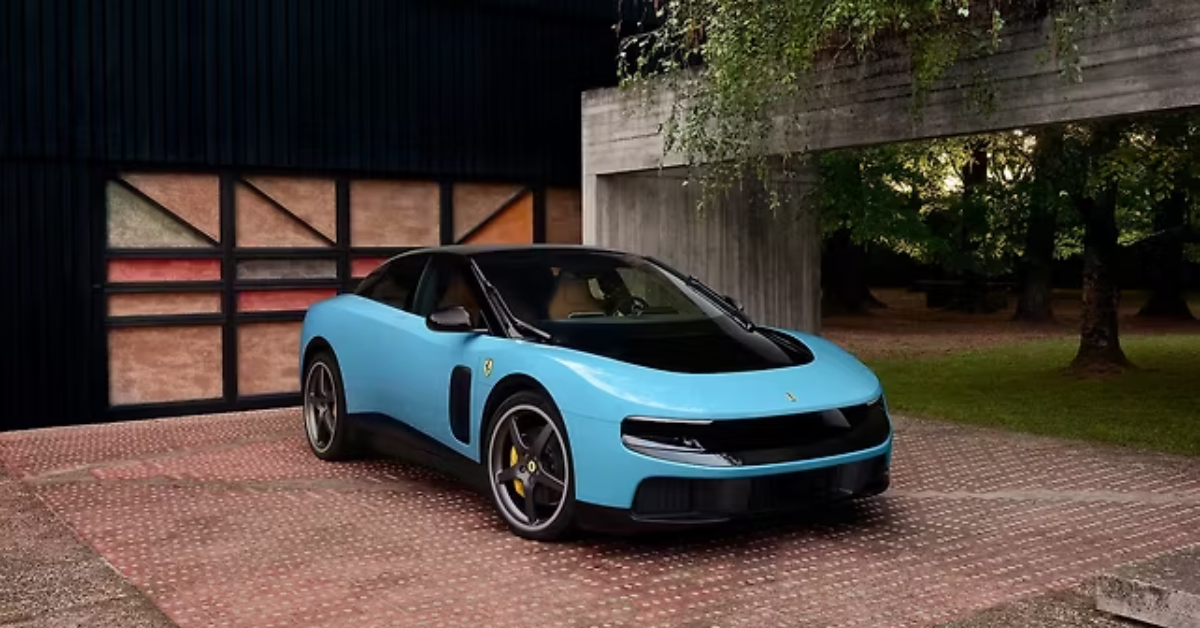
Ferrari has finally stepped into the electric future, and the reaction from the automotive world is exactly what many expected — excitement, confusion, curiosity, and controversy all at the same time.
For decades, Ferrari has represented the purest form of automotive emotion. The brand became legendary because of:
- High-revving engines
- Aggressive supercar styling
- Iconic exhaust sound
- Race-inspired engineering
- Emotional driving experience
But now, Ferrari has officially revealed its first fully electric vehicle, marking one of the biggest turning points in the company’s history.
And honestly, people are not quite sure what to think.
The biggest surprise is not simply that Ferrari built an EV. The real shock comes from how different the vehicle looks and feels compared to traditional Ferraris. Instead of a classic low-slung exotic supercar with dramatic engine-focused proportions, Ferrari’s first EV appears futuristic, unconventional, and almost experimental.
Some enthusiasts love the bold direction.
Others believe it barely resembles a Ferrari at all.
So why has Ferrari taken such a radical approach? Is this truly the future of the legendary Italian brand, or is Ferrari risking the emotional identity that made it famous?
Let’s take a closer look at why Ferrari’s first electric car has become one of the most debated automotive reveals in recent years.
Ferrari Is Entering Completely Unknown Territory
For Ferrari, moving into electric vehicles is not just another product launch — it is a complete transformation of philosophy.
Ferrari has always built its reputation around engines. The sound of a Ferrari V8 or V12 is considered by many enthusiasts to be part of automotive history itself.
That emotional soundtrack has always been central to the Ferrari experience.
But electric vehicles change everything.
Instead of:
- Engine roar
- Gearshift drama
- Mechanical aggression
EVs focus on:
- Instant acceleration
- Silent performance
- Software-driven dynamics
- Battery efficiency
This fundamental shift explains why Ferrari’s first EV already feels so different.
The Design Is What Shocked People the Most
The first thing enthusiasts noticed about Ferrari’s EV was its unusual styling.
Why It Looks So Different
Traditional Ferraris usually feature:
- Extremely low proportions
- Dramatic air intakes
- Mid-engine supercar layout
- Aggressive aerodynamic shapes
The new EV, however, appears:
- Taller
- More futuristic
- More sculpted
- Less traditionally aggressive
Some people even describe it as looking closer to a futuristic crossover or grand tourer rather than a classic Ferrari supercar.
That dramatic change has divided opinions instantly.
EV Architecture Changes Everything
One major reason the car looks unusual is because electric vehicles require completely different engineering layouts.
Traditional Ferrari Design Depends on Engines
Most Ferraris are designed around:
- Large combustion engines
- Rear or mid-engine placement
- Complex cooling systems
- Exhaust packaging
Electric vehicles work differently.
Ferrari’s EV now needs to accommodate:
- Large battery packs
- Electric motors
- Advanced thermal systems
- Flat-floor architecture
These requirements completely alter:
- Vehicle proportions
- Cabin layout
- Aerodynamic design
- Weight distribution
So even if Ferrari wanted to make the EV look exactly like older models, the underlying structure naturally changes the design.
Aerodynamics Now Matter More Than Ever
Ferrari has always cared deeply about aerodynamics, but EVs take aerodynamic efficiency to another level.
Why EVs Need Better Airflow Management
Electric vehicles rely heavily on efficiency because:
- Lower drag improves driving range
- Better airflow enhances battery cooling
- Aerodynamic stability improves performance
As a result, Ferrari’s EV uses:
- Cleaner body lines
- Smoother surfaces
- More sculpted airflow channels
This gives the car a futuristic appearance rather than the raw aggression seen in traditional Ferraris.
Some enthusiasts appreciate the innovation, while others miss the drama of classic Ferrari styling.
Ferrari Is Trying to Build a New Identity
One interesting aspect of this reveal is that Ferrari does not appear interested in simply creating an “electric version” of an older Ferrari.
Instead, the company seems focused on creating:
- A new design language
- A new emotional experience
- A future-focused performance identity
This is risky but understandable.
If Ferrari merely copied older designs, the EV might constantly feel like an imitation of combustion-powered legends.
Instead, Ferrari appears determined to make its EV feel like:
- The beginning of a new era
- A technological evolution
- A separate chapter in Ferrari history
The Lack of Engine Sound Feels Strange
Perhaps the biggest emotional challenge is the absence of Ferrari’s signature sound.
For decades, Ferrari engines created:
- Excitement
- Drama
- Personality
- Emotional connection
Without that sound, many enthusiasts feel something important is missing.
Even if the EV delivers incredible acceleration, some people argue:
“A Ferrari should sound alive.”
This emotional debate may continue for years as more supercar brands transition toward electrification.
Younger Buyers May Love It More
Interestingly, Ferrari’s EV may appeal more strongly to younger luxury buyers than traditional enthusiasts.
Today’s younger buyers often prioritize:
- Futuristic technology
- Sustainability
- Digital integration
- Modern design
- Innovation
Many of them grew up during the rise of:
- Electric performance cars
- High-tech vehicles
- Software-driven experiences
For this audience, Ferrari’s futuristic EV approach may actually feel exciting and modern rather than controversial.
Performance Expectations Are Extremely High
Even though the styling has divided opinions, nobody doubts Ferrari’s engineering capabilities.
The EV is expected to deliver:
- Extremely fast acceleration
- Advanced handling technology
- Instant torque response
- High-speed performance
- Sophisticated driving dynamics
Ferrari knows performance remains the heart of its brand.
The company cannot afford to release an EV that feels slow or emotionally disconnected behind the wheel.
That is why expectations are incredibly high.
Ferrari Must Compete in a New Performance Era
The electric supercar market is becoming increasingly competitive.
Ferrari now faces pressure from:
- Electric hypercars
- Luxury performance EVs
- High-tech performance sedans
- Next-generation electric GT cars
The company cannot rely only on heritage anymore.
To stay relevant in the future, Ferrari must prove it can compete technologically while preserving emotional appeal.
This challenge explains why the EV reveal feels so ambitious and experimental.
The Interior Could Become Highly Digital
Ferrari’s electric future will likely involve much more digital integration.
Expected EV Cabin Focus
The new Ferrari EV may emphasize:
- Large digital displays
- Advanced software systems
- Connected technology
- Futuristic driver interfaces
- AI-enhanced driving systems
Traditional analog supercar experiences are gradually evolving into software-focused luxury environments.
Some buyers will love this transformation.
Others may miss Ferrari’s old-school mechanical character.
Ferrari Is Balancing Tradition and Innovation
Perhaps the most difficult challenge Ferrari faces is balancing:
- Heritage
- Innovation
- Emotion
- Electrification
The company must modernize without losing the emotional magic that built its reputation.
That balancing act explains why reactions to the EV are so mixed.
Ferrari is essentially trying to answer one enormous question:
“How do you make an electric car still feel like a Ferrari?”
Many Enthusiasts May Need Time to Accept It
Historically, Ferrari fans have often resisted major changes at first.
The same thing happened with:
- Turbocharged Ferraris
- Hybrid Ferraris
- Larger Ferrari models
- SUV-inspired Ferrari vehicles
Over time, many controversial decisions eventually became accepted.
The first Ferrari EV may follow a similar path.
Right now, the unfamiliar styling and silent powertrain feel shocking because they challenge decades of tradition.
But future generations may eventually view this EV as a historic turning point.
Ferrari’s EV Is Bigger Than Just One Car
This reveal represents far more than a single product launch.
It signals:
- Ferrari’s long-term future
- The changing automotive industry
- The rise of electrification
- The evolution of luxury performance
Whether enthusiasts like it or not, the automotive world is changing rapidly.
Ferrari clearly understands that surviving the future requires adaptation.
Final Verdict
Ferrari’s first electric vehicle is bold, futuristic, controversial, and deeply fascinating all at once. It does not look like a traditional Ferrari because Ferrari is entering an entirely new technological era where old design rules no longer fully apply.
The unusual styling, silent performance, and futuristic proportions may initially feel strange to long-time enthusiasts who associate Ferrari with roaring engines and aggressive supercar drama.
However, the reveal also shows something important:
Ferrari is not trying to copy the past.
Instead, the company appears determined to create a completely new kind of Ferrari for the electric age — one built around:
- Technology
- Efficiency
- Instant performance
- Modern luxury
- Future-focused innovation
Whether fans ultimately embrace it or reject it may depend on one critical factor:
Can Ferrari still deliver emotion without the sound of a combustion engine?
That question will likely define the future of not only Ferrari, but the entire high-performance automotive world.