
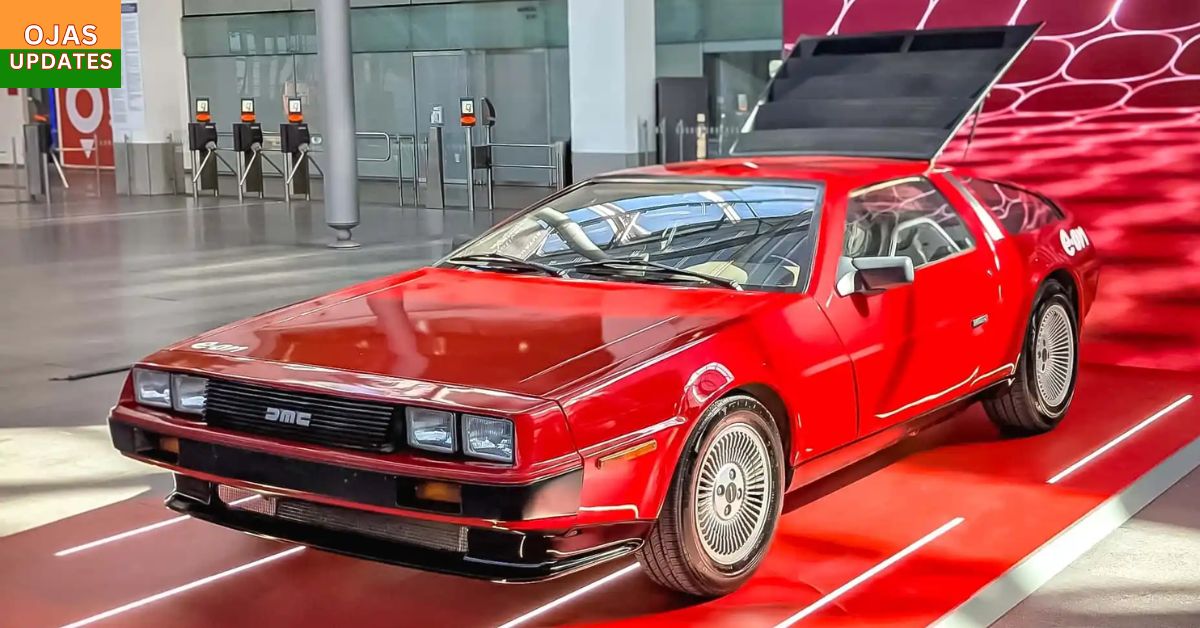
In the Annals of Automotive history, few cars have occupied a space as paradoxical as the DeLorean DMC-12. It is a vehicle that famously “failed” as a product, bankrupting its visionary creator and closing its factory doors after just two years of production. Yet, more than four decades later, it remains one of the most instantly recognizable silhouettes on the planet.
In 2026, the DeLorean isn’t just a car; it’s a cultural touchstone that refuses to fade into the rearview mirror.
The Vision of John DeLorean
Before the scandals and the cinema, there was the man. John Zachary DeLorean was the quintessential American “car guy”—a rogue executive who climbed the ranks at General Motors, spearheaded the Pontiac GTO, and eventually decided the industry was too stagnant for his ambitions.
His dream for the DMC-12 was radical: he wanted to build an “ethical car.” It was designed to be safe, long-lasting, and rust-proof. To achieve this, he turned to the legendary Giorgetto Giugiaro for design and Colin Chapman of Lotus for the chassis engineering. The result was a stainless-steel wedge that looked like it had been stolen from the set of a sci-fi epic.
Key Features that Defined the Icon
- The Brushed Stainless Steel Body: Unlike almost every other car on the road, the DMC-12 was unpainted. Its grade 304 stainless steel panels meant that rust was a non-issue, though fingerprints became the bane of every owner’s existence.
- Gull-Wing Doors: These weren’t just for show. Because of their unique hinge geometry, they required only 14 inches of side clearance to open—making them more practical in tight parking spots than traditional doors.
- The Rear-Engine Layout: Borrowing from European designs, the DMC-12 utilized a rear-mounted 2.85-liter V6 engine, a joint venture between Peugeot, Renault, and Volvo (the “PRV” engine).
The Reality Check: Performance vs. Perception
If you ask someone today what a DeLorean is like to drive, they might imagine a rocket ship. The reality in 1981 was a bit more grounded. While the car looked like a supercar, it was significantly underpowered.
| Specification | Metric |
| Engine | 2.85L PRV V6 |
| Horsepower | 130 hp (US Spec) |
| 0-60 MPH | ~10.5 Seconds |
| Top Speed | 109 mph |
The DMC-12 was often criticized for being “all show and no go.” Between the modest engine output and the heavy stainless steel body, it struggled to keep up with the Ferraris and Porsches of the era. However, for most fans, the lackluster performance mattered far less than the presence of the car. It was, quite literally, a UFO on wheels.
From Bankruptcy to the Big Screen
By 1982, The DeLorean Motor Company was in freefall. A global recession, production delays in Northern Ireland, and a high-profile legal scandal involving John DeLorean (of which he was later acquitted) led to the factory’s closure. Only about 9,000 cars were ever produced.
Then came 1985.
When Back to the Future hit theaters, the DMC-12 was transformed from a business failure into a global legend. Director Robert Zemeckis famously chose the car because its gull-wing doors made it look like an alien spaceship to a 1950s family. Suddenly, every child in the world knew about the Flux Capacitor and the magic of hitting 88 mph.
“The way I see it, if you’re gonna build a time machine into a car, why not do it with some style?” — Dr. Emmett Brown
The DeLorean Today: 2026 and the Future
As we stand in 2026, the DeLorean is experiencing a massive second act. Approximately 6,000 of the original cars are estimated to still exist, supported by a thriving community of enthusiasts and the DeLorean Motor Company (DMC) based in Texas, which provides parts and full restorations.
But the story doesn’t end with the past. The brand is currently being “reimagined” for the electric age.
- The Alpha5: A new, all-electric flagship that carries the torch of the gull-wing doors into the EV era.
- Restomod Culture: Many owners are now swapping the original PRV V6 for modern electric powertrains or high-performance crate engines, finally giving the car the speed its design always promised.
Final Thoughts
The DeLorean DMC-12 is a testament to the power of design and the immortality of pop culture. It is a car that technically failed at everything a “car company” is supposed to do, yet succeeded at something much harder: it captured our collective imagination.
Whether you’re a collector, a movie buff, or just someone who appreciates a bold idea, the DeLorean remains the ultimate symbol of the 1980s—a time when the future felt like it was just one gull-wing door away.