

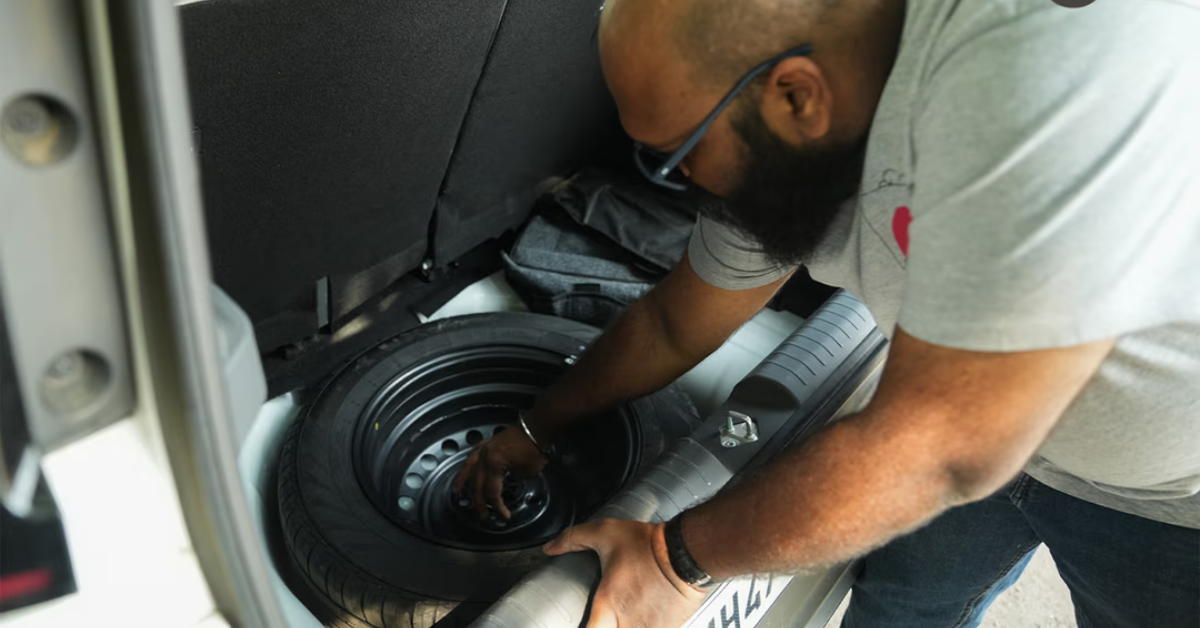
In recent years, the Indian automobile industry has seen a subtle but concerning trend—many manufacturers are starting to remove the spare wheel from standard offerings. Instead, buyers are given tyre repair kits or optional spare wheels at an additional cost.
While this may seem like a minor change on paper, in reality, it raises serious concerns about safety, practicality, and real-world usability—especially in a country like India.
The question is simple: Should a spare wheel be optional, or should it be a standard feature in every car?
The answer, for most Indian road conditions, is clear—a spare wheel is not a luxury. It is a necessity.
The Reality of Indian Roads


6
India’s road infrastructure is improving, but it still presents unpredictable challenges.
From urban potholes to rural dirt roads, drivers frequently encounter conditions that increase the risk of tyre damage.
Common Road Challenges:
- Deep potholes during monsoon
- Uneven village roads
- Construction zones
- Sharp debris on highways
In such conditions, tyre punctures or damage are not rare—they are expected.
Without a spare wheel, even a simple puncture can turn into a major inconvenience.
Why Tyre Repair Kits Are Not Enough
Many car manufacturers now provide tyre repair kits instead of spare wheels. While these kits may work in specific situations, they are not a complete solution.
Limitations of Repair Kits:
- Cannot fix major tyre damage or sidewall cuts
- Temporary solution, not permanent
- Requires technical understanding
- Not effective for multiple punctures
In real-life situations, especially on highways or remote roads, these kits often fail to provide the reliability that a spare wheel offers.
Safety Concerns: More Than Just Convenience


6
The absence of a spare wheel is not just inconvenient—it can be dangerous.
Imagine being stranded on a highway at night or in an isolated area due to a tyre puncture. Without a spare wheel, your options become limited and risky.
Safety Risks Include:
- Being stranded in unsafe locations
- Delays in roadside assistance
- Increased vulnerability during night travel
- Stress and panic, especially for families
For many drivers, especially those traveling with family, safety should never be compromised for cost-cutting measures.
Cost-Cutting vs Customer Needs
Automakers often justify the removal of spare wheels as a way to reduce weight, improve fuel efficiency, or lower costs.
However, this approach raises an important question:
Is saving a small amount of cost worth compromising customer safety and convenience?
For Indian buyers, the answer is clearly no.
What Buyers Expect:
- Practical features
- Reliability in all conditions
- Safety during emergencies
A spare wheel directly contributes to all three.
Urban vs Rural Reality
The argument against spare wheels often assumes ideal urban conditions. But India is far more diverse.
Urban Areas:
- Better road infrastructure
- Easier access to service centers
- Faster roadside assistance
Rural & Highway Areas:
- Limited service availability
- Poor road conditions
- Longer waiting times for help
In rural and highway scenarios, a spare wheel is not optional—it is essential.
Impact on Long-Distance Travel
India has a strong culture of road trips and long-distance travel. Whether it’s hill stations, highways, or remote tourist spots, drivers often travel far from cities.
In such situations, relying solely on repair kits or assistance services is risky.
Why Spare Wheels Matter for Travel:
- Immediate solution for punctures
- No dependency on external help
- Peace of mind during journeys
For frequent travelers, a spare wheel is a basic requirement.
The Psychological Factor: Peace of Mind
Driving confidence is an underrated aspect of vehicle ownership.
Knowing that you have a spare wheel gives you peace of mind, especially when traveling long distances or driving in unfamiliar areas.
Without it, even a small issue can cause anxiety and stress.
Global Practices vs Indian Reality
In many developed countries, removing spare wheels may make sense due to:
- Excellent road infrastructure
- Reliable roadside assistance
- Shorter distances between service points
However, India’s conditions are very different.
Adopting global practices without adapting them to local realities can lead to practical problems for users.
Who Is Most Affected?
The absence of a spare wheel affects certain groups more than others.
1. Families
Safety and convenience are top priorities.
2. Women Drivers
Being stranded can be more concerning in isolated areas.
3. Rural Users
Limited access to repair services increases dependency on a spare wheel.
4. Frequent Travelers
Higher chances of encountering tyre issues.
Pros of Having a Spare Wheel
Advantages:
- Immediate solution to punctures
- Increased safety
- Independence from external help
- Essential for long journeys
- Peace of mind
Arguments Against Spare Wheels (And Why They Fall Short)
1. Adds Weight
Yes, but the safety benefits outweigh the minor impact on efficiency.
2. Increases Cost
The cost difference is minimal compared to the convenience it offers.
3. Not Frequently Used
True, but it’s crucial in emergencies—just like airbags or seatbelts.
What Should Automakers Do?
Car manufacturers need to rethink their strategy when it comes to essential features.
Recommended Approach:
- Make spare wheels standard across all variants
- Offer full-size spare wheels instead of space-savers
- Educate buyers about safety importance
Customer trust is built not just on features, but on practicality and reliability.
What Should Buyers Do?
As a buyer, it is important to prioritize safety and practicality.
Things to Check Before Buying:
- Whether a spare wheel is included
- Type of spare wheel (full-size or space-saver)
- Availability of tools for tyre replacement
If a car does not offer a spare wheel, consider adding one as an essential accessory.
Final Verdict: Should Spare Wheels Be Standard?
The answer is simple and clear.
👉 Yes, every car in India should come with a spare wheel as standard.
It is not just about convenience—it is about safety, reliability, and peace of mind.
Conclusion
In a country like India, where road conditions can be unpredictable and assistance is not always immediately available, a spare wheel is an essential feature—not an optional add-on.
While automakers may focus on reducing costs and improving efficiency, they must not overlook the real-world needs of Indian buyers.
A spare wheel represents preparedness, safety, and confidence. Removing it may save a small amount of cost, but it can create significant challenges for drivers.
For Indian roads and driving conditions, the spare wheel is not outdated—it is indispensable.