

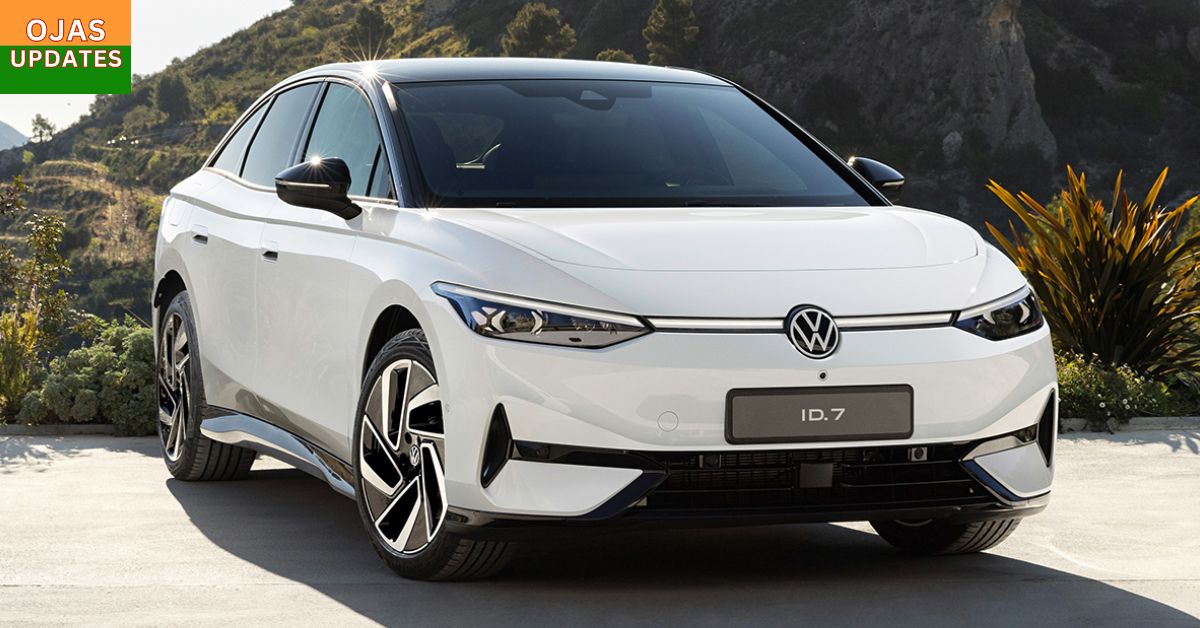
Volkswagen has officially canceled plans to launch the ID.7 electric sedan in North America, citing the “challenging EV climate.” Originally slated for release in 2024, the ID.7 was delayed and has now been permanently shelved for the U.S. and Canadian markets. While the model continues to be sold in Europe, this decision underscores the shifting dynamics of the electric vehicle (EV) industry and the challenges automakers face in balancing ambition with market realities.
⚡ What Was the ID.7?
The Volkswagen ID.7 was envisioned as the brand’s flagship electric sedan, part of its expanding ID family. Built on the MEB platform, the car promised:
- 282 hp electric motor
- EPA-estimated range of over 300 miles
- Advanced infotainment and driver-assistance systems
It was designed to compete with rivals like the Tesla Model 3, Hyundai Ioniq 6, and BMW i4, offering a blend of practicality, performance, and Volkswagen’s signature engineering.
❄️ Why Was It Scrapped?
Volkswagen’s decision reflects broader challenges in the EV market:
- Sluggish demand growth: EV adoption in North America has slowed, with many buyers hesitant due to charging infrastructure gaps and higher upfront costs.
- Market dynamics: Volkswagen admitted in 2024 that it was making “market-driven choices while listening to customers,” delaying the ID.7’s launch before ultimately canceling it.
- Competitive pressure: Tesla’s dominance and aggressive pricing, combined with strong offerings from Korean and American brands, made it difficult for VW to carve out space.
- Economic climate: Rising interest rates and cautious consumer spending have further dampened enthusiasm for premium EV sedans.
🏁 Impact on Volkswagen’s EV Strategy
The cancellation leaves Volkswagen with only two EVs in its U.S. lineup—the ID.4 SUV and the upcoming ID. Buzz minivan. This significantly narrows the brand’s portfolio in a market where variety is key to capturing different customer segments.
However, Volkswagen insists that EVs remain central to its long-term strategy, with new models planned for North America. The company is likely to focus on SUVs and crossovers, which continue to dominate sales compared to sedans.
🌍 Global Perspective
While North America won’t see the ID.7, the sedan remains available in Europe, where EV adoption is stronger thanks to government incentives and better charging infrastructure. The ID.7’s cancellation highlights the regional disparities in EV readiness:
- Europe: Strong policy support and consumer demand sustain models like the ID.7.
- North America: Consumers lean toward SUVs and trucks, with sedans struggling to gain traction.
This divergence may push automakers to tailor their EV strategies more closely to regional preferences.
💡 Lessons for the Industry
Volkswagen’s move offers several insights into the evolving EV landscape:
- Flexibility is key: Automakers must adapt quickly to shifting demand and economic conditions.
- Infrastructure matters: Without robust charging networks, even well-designed EVs face adoption hurdles.
- Segment focus: SUVs and crossovers remain the safest bets in North America, while sedans may thrive in Europe and Asia.
✨ Conclusion
The Volkswagen ID.7’s cancellation in North America is a sobering reminder that the EV transition is not a straight path. Despite its promising specs and global appeal, the ID.7 fell victim to market realities—sluggish demand, fierce competition, and consumer preferences. For Volkswagen, this is not the end of its EV ambitions but a recalibration. The company will continue to push forward with models better aligned to North American tastes, while the ID.7 finds its audience in Europe.