
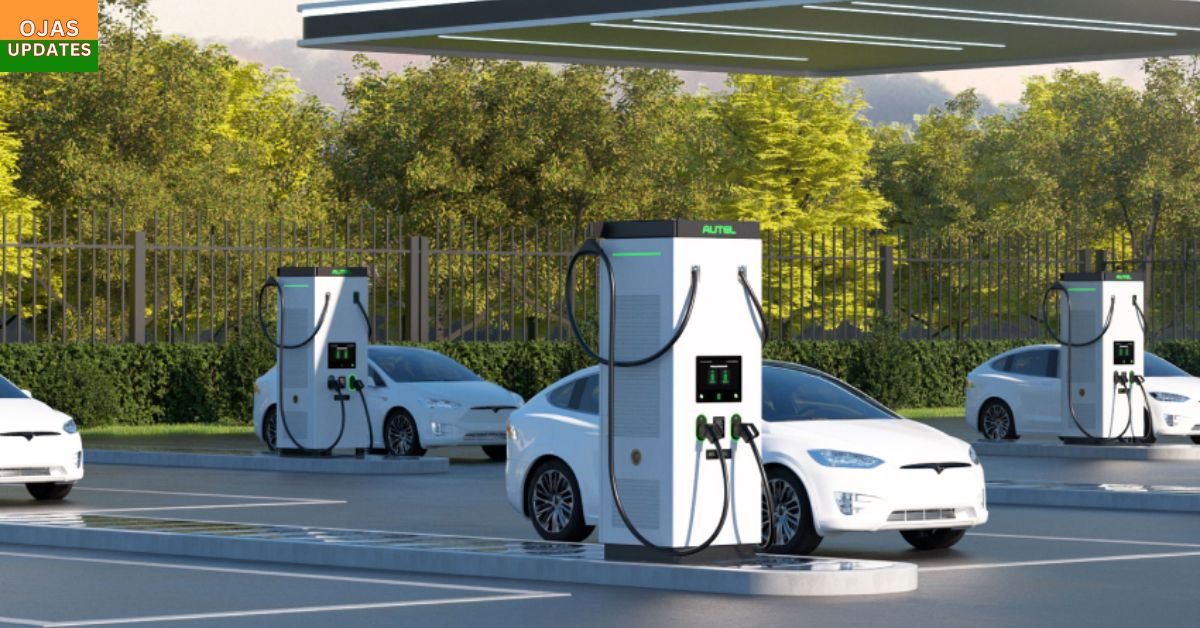
The electric vehicle (EV) revolution in India just received a massive, structural shot in the arm. In a decisive legislative move, the Haryana government has amended the Haryana Building Code 2017, making the installation of electric vehicle charging infrastructure mandatory for all new and significantly renovated residential and commercial complexes across the state.
By passing this law, Haryana’s Town and Country Planning Department has shifted EV infrastructure away from being a “premium luxury amenity” and transformed it into a baseline building requirement. For cities like Gurugram and Faridabad, which are rapidly expanding hubs of corporate and residential high-rises, this policy serves as a future-proof blueprint for sustainable urban living.
Here is everything you need to know about Haryana’s sweeping new EV mandate and what it means for buyers, developers, and the environment.
Breaking Down the Numbers: The New Mandate
The amended code targets any commercial or residential project featuring parking spaces for 10 or more vehicles. The state government has laid out clear, mathematically precise requirements depending on the type of property:
1. Commercial and Non-Residential Developments
For shopping malls, hotels, IT parks, office complexes, and commercial plazas, the rule is stringent:
- Ratio: At least one EV charging point for every three parking slots ($1:3$).
- Readiness: The properties must be 100% EV-ready. This means even if a charger isn’t physically attached to every single slot yet, the underlying conduits, wiring space, and electrical panel capacities must be built in at the architectural stage to allow for instant plug-and-play expansions in the future.
2. Residential Projects and Group Housing Societies
For multi-family residential frameworks—including cooperative housing projects, group housing societies, and complexes managed by Resident Welfare Associations (RWAs):
- Ratio: At least one EV charging point for every five parking slots ($1:5$).
- Readiness: Similar to commercial buildings, new residential facilities must possess 100% conduit readiness across all parking bays.
Crucial Exemptions: Making it Easier for Developers
Whenever environmental mandates are handed down, the immediate worry is the financial burden passed along to the real estate sector. However, Haryana has cleverly structured this policy to incentivize developers.
The Floor Area Ratio (FAR) Incentive: The state government has explicitly clarified that EV charging infrastructure will be entirely exempt from Floor Area Ratio calculations.
This is a massive win for real estate economics. It means developers can allocate space for transformers, heavy cabling, and charging booths in basements or stilt parking areas without sacrificing precious, saleable built-up space. It prevents the mandate from eating into developers’ profit margins, ensuring that properties remain financially viable without triggering a spike in real estate prices.
Navigating the Basement Safety Debate
This policy update lands on the heels of a massive public debate in Gurugram, where the Haryana Fire Department had briefly flagged basement EV charging points as unsafe, causing several residential societies to panic-remove their private chargers.
The new 2026 amendment officially clears the air: EV charging stations are permitted in basements and stilt floors, provided they strictly comply with standard electrical and fire safety protocols.
To ensure there is zero ambiguity moving forward, the state has directed the Fire and Emergency Services Department, in conjunction with power distribution companies (discoms), to draft a comprehensive, dedicated safety framework explicitly for indoor EV infrastructure. Furthermore, developers are now required to formally disclose their EV charging layouts before they can successfully secure an Occupation Certificate (OC).
What About Existing Apartment Owners?
The government hasn’t forgotten about those who already live in established high-rises. The amended building code grants individual apartment owners the legal right to install EV charging equipment within their designated parking slots (whether outdoor or in the basement).
As long as the individual allottee obtains the necessary electrical and fire safety clearances from the respective power utilities and the Fire Department, RWAs can no longer arbitrarily block residents from setting up their own personal charging stations.
The Verdict: Driving India’s Green Future
The “chicken-and-egg” dilemma of the EV market has always been that people won’t buy electric cars without chargers, and companies won’t build chargers if there aren’t enough cars on the road. By encoding charging infrastructure into the very concrete and mortar of its cities, Haryana has broken the cycle.
This proactive approach stops expensive, messy structural retrofitting down the line. It ensures that as people transition to cleaner mobility, the grid and the buildings they live and work in are already waiting to support them. Haryana has set a powerful precedent—one that other rapidly urbanizing states across India would be wise to emulate.