
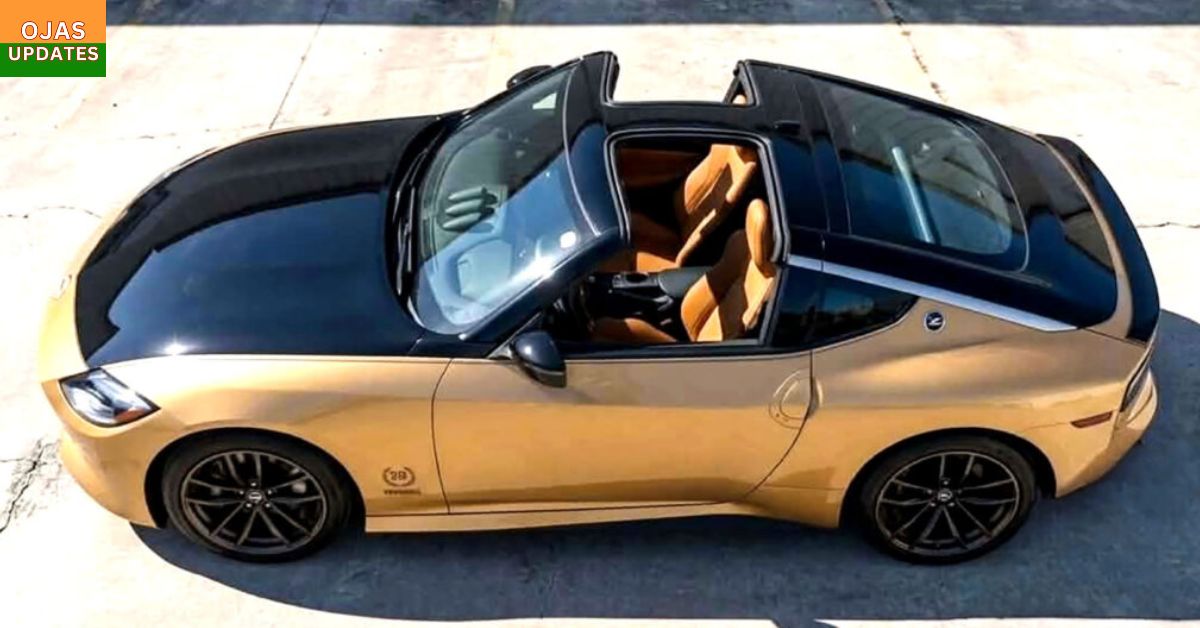
There is a distinct, visceral magic to the automotive culture of the late 1970s and 1980s. It was an era of synthwave soundtracks, neon-lit digital dashboards, and an obsession with open-air motoring. While convertibles were great, a different breed of roof design captured the imagination of sports car enthusiasts: the T-top.
And no car wore the T-top quite like the Nissan Z.
From the Datsun 280ZX to the legendary Z32 300ZX of the 1990s, removable glass panels were practically hardwired into the Z-car’s DNA. But when the 350Z arrived in the early 2000s, followed by the 370Z and the current twin-turbo Nissan Z, the T-top vanished, replaced by standard slick-tops and traditional canvas convertibles.
As automotive design swings back toward nostalgic, driver-focused experiences, it’s time to make a bold declaration: Nissan needs to bring back the T-top Z.
The Best of Both Worlds (Minus the Flex)
To understand why a modern T-top Nissan Z would be a masterstroke, we have to look at the compromise of modern sports cars. Drivers today are forced to make a binary choice: the rigid, track-focused precision of a hardtop coupe, or the heavy, structurally compromised nature of a convertible.
The T-top represents the ultimate middle ground. By maintaining a rigid center structural beam (the “T-bar”) connecting the windshield header to the rear roof structure, Nissan could offer the open-sky freedom people crave without sacrificing the chassis stiffness required to handle the current Z’s 400-horsepower twin-turbo V6.
Imagine carving through a mountain pass. The roof panels are stowed in the trunk, the wind is rushing through the cabin, and you can hear the unfiltered bark of the exhaust echo off the canyon walls. Yet, when you throw the car into a sharp apex, there’s no modern convertible scuttle shake. The chassis remains taut, predictable, and remarkably sharp.
Redesigning a Classic for the 2020s
Bringing a T-top into the modern era isn’t just a matter of hacking up the current roofline; it’s an incredible design opportunity.
The current Nissan Z is already a gorgeous love letter to its ancestors, blending the silhouette of the original 240Z with the minimalist rear end of the 300ZX. Adding T-tops would be the ultimate nod to the Z32 generation.
Here is how Nissan could execute a modern T-top flawlessly:
- Smart Glass Technology: Instead of heavy, hot glass panels that bake the cabin in July, Nissan could utilize electrochromic “smart” glass. With the touch of a button, the panels could transition from completely transparent to deeply tinted, blocking UV rays without needing a physical sunshade.
- Lightweight Carbon Fiber Frames: To keep the car’s center of gravity as low as possible, the removable panels could be constructed with lightweight carbon fiber frames and impact-resistant, lightweight composite glass.
- Seamless Storage: One of the historic pain points of T-tops was the loss of trunk space. A modern Z could feature dedicated, felt-lined locking slots directly behind the seats or a slim, integrated tray in the cargo area that secures the panels without eating up your weekend luggage space.
The Retro-Futurism Boom
We are living in an era deeply infatuated with retro-futurism. Car enthusiasts aren’t just looking for spreadsheet statistics, 0–60 times, or digital lap timers anymore; they are searching for personality.
The current automotive landscape is flooded with highly capable but sterile performance cars. A T-top Nissan Z would stand completely alone in its segment. The Toyota Supra, the Ford Mustang, and the Porsche Cayman don’t offer anything like it. It would instantly transform the Z from a highly competent sports car into a lifestyle icon, appealing directly to the Radwood-era generation that is now driving the collector car market.
The Verdict: A Risk Worth Taking
Automotive bean-counters will always argue that engineering a new roof structure for a niche sports car is too expensive. Crash safety standards are stricter than ever, and managing water seals on removable panels is a notorious engineering headache.
But Nissan has never been a company to completely shy away from doing things just because they are hard. The Z has always been the “Soul of Nissan.”
A modern T-top Nissan Z wouldn’t just be a sales success; it would be a halo vehicle for automotive romance. It’s a statement that driving still matters, that heritage is worth celebrating, and that sometimes, the best way to move forward is to look through a pair of removable glass panels at the open sky ahead.