
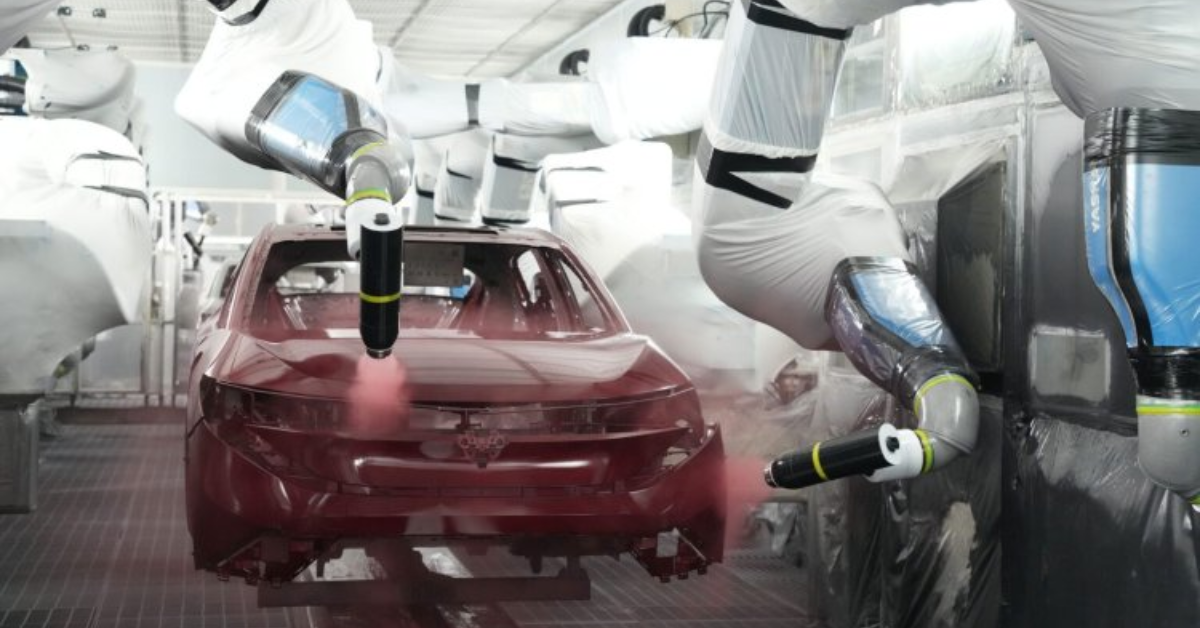
The global automobile industry is rapidly moving toward sustainability, and automakers are now exploring innovative ways to reduce industrial waste and improve eco-friendly manufacturing. In a major breakthrough, Nissan has introduced a unique recycling initiative that transforms automotive paint waste into sound-insulating sheets for vehicles.
This innovative approach highlights Nissan’s growing commitment toward sustainable manufacturing, carbon reduction, and environmentally responsible automotive production. Instead of discarding leftover paint waste generated during vehicle manufacturing, the company is now converting it into useful soundproofing material that improves cabin comfort and reduces environmental impact.
The initiative represents a major step forward in circular economy practices within the automotive industry. By turning industrial waste into valuable automotive components, Nissan is showing how modern car manufacturers can combine sustainability with practical innovation.
The development also reflects a larger global trend where automakers are increasingly investing in green technology, recycling systems, energy-efficient manufacturing, and environmentally conscious engineering solutions.
Let’s take a detailed look at how Nissan’s paint recycling technology works, why it matters, and how it could influence the future of sustainable car manufacturing worldwide.
The Growing Need For Sustainable Automotive Manufacturing
The automotive industry is one of the world’s largest manufacturing sectors, and it generates significant amounts of industrial waste during production processes.
Vehicle manufacturing involves:
- Metal processing
- Plastic molding
- Chemical coatings
- Paint application
- Battery production
- Energy-intensive assembly operations
Among these processes, automotive painting creates large quantities of leftover paint sludge and coating waste.
Traditionally, paint waste has been difficult to recycle because it contains complex chemical compounds and mixed materials. Disposing of this waste often requires expensive treatment methods and can negatively impact the environment if not handled properly.
As governments around the world introduce stricter environmental regulations, automakers are under increasing pressure to reduce waste, lower emissions, and improve recycling efficiency.
Nissan’s latest innovation directly addresses this challenge by finding a productive and sustainable use for paint waste materials.
How Nissan’s Paint Waste Recycling Technology Works
Nissan’s new process focuses on converting leftover paint waste into specialized sound-insulating sheets used inside vehicles.
During automobile manufacturing, excess paint materials are collected from painting booths and industrial filtration systems. Instead of discarding these materials, Nissan processes and transforms them into recycled composite sheets.
These sheets are then used inside vehicle cabins to improve sound insulation and reduce unwanted road noise.
The process involves several stages, including:
- Paint waste collection
- Material separation
- Drying and treatment
- Compression processing
- Sheet formation
- Acoustic performance testing
The final product becomes a functional component that improves cabin refinement while simultaneously reducing industrial waste.
This approach allows Nissan to reduce dependence on newly manufactured soundproofing materials, which also lowers overall resource consumption.
Improving Cabin Comfort Through Recycling
One of the most interesting aspects of Nissan’s innovation is that the recycled material serves a premium functional purpose rather than being limited to low-grade industrial applications.
Modern car buyers increasingly expect:
- Quieter cabins
- Reduced vibration
- Better highway refinement
- Premium comfort
- Improved acoustic insulation
Sound-insulating sheets play a major role in reducing:
- Tire noise
- Engine vibration
- Wind noise
- Road surface sounds
By using recycled paint waste for soundproofing, Nissan combines sustainability with customer-focused comfort improvements.
This demonstrates how eco-friendly technologies can also enhance vehicle quality and driving experience.
Supporting Circular Economy Practices
Nissan’s initiative strongly supports the concept of a circular economy.
A circular economy focuses on:
- Minimizing waste
- Reusing materials
- Recycling industrial byproducts
- Extending material life cycles
- Reducing raw material consumption
Instead of following the traditional “use and dispose” manufacturing model, companies adopting circular economy strategies attempt to continuously reuse resources.
Nissan’s paint recycling system represents a practical example of this philosophy in action.
The company is effectively turning industrial waste into a valuable automotive product, reducing landfill disposal and minimizing environmental impact.
As sustainability becomes increasingly important for global industries, circular economy solutions are expected to become more common in automotive manufacturing.
Reducing Environmental Impact
Paint waste disposal can create environmental challenges because automotive coatings often contain chemical compounds that require careful treatment.
By recycling paint waste into soundproofing materials, Nissan may achieve several environmental benefits, including:
- Reduced landfill waste
- Lower chemical disposal requirements
- Reduced raw material consumption
- Lower manufacturing emissions
- Improved recycling efficiency
The initiative may also contribute toward Nissan’s broader carbon neutrality goals and sustainability targets.
Many automakers are now actively working to reduce carbon emissions not only from vehicles but also from manufacturing operations.
Sustainable production methods are becoming just as important as electric vehicle development in the global automotive industry.
Nissan’s Broader Sustainability Vision
The paint recycling initiative is part of Nissan’s larger strategy focused on environmental sustainability and green mobility innovation.
The company has already invested heavily in:
- Electric vehicle technology
- Battery innovation
- Renewable energy integration
- Sustainable manufacturing systems
- Carbon reduction programs
- Eco-friendly supply chains
Nissan’s electric vehicles have already helped position the company as an early leader in sustainable transportation.
Now, by improving factory sustainability and industrial recycling, Nissan is expanding its environmental efforts beyond vehicle emissions alone.
This holistic approach may become increasingly important as consumers and regulators demand more responsible manufacturing practices from global automakers.
Why Sustainable Innovation Matters To Buyers
Today’s car buyers are becoming more environmentally conscious than ever before.
Many customers now consider factors such as:
- Sustainability
- Carbon footprint
- Recyclable materials
- Eco-friendly manufacturing
- Energy efficiency
when purchasing vehicles.
Automakers that successfully integrate sustainability into both products and manufacturing processes may gain stronger long-term customer trust.
Nissan’s recycling initiative sends a positive message to environmentally aware consumers who want brands to take real action toward sustainability.
At the same time, innovations like these prove that eco-friendly manufacturing does not necessarily compromise comfort, quality, or performance.
Potential Industry Impact
Nissan’s technology could inspire similar recycling initiatives across the automotive industry.
Other manufacturers may begin exploring ways to recycle:
- Plastic waste
- Battery materials
- Rubber compounds
- Interior fabrics
- Metal scraps
- Chemical byproducts
As environmental regulations become stricter globally, sustainable manufacturing innovations will likely become essential rather than optional.
Automakers that fail to invest in greener production methods may face increasing pressure from governments, investors, and customers.
Nissan’s paint recycling system could therefore represent an early example of future automotive manufacturing trends.
The Future Of Eco-friendly Automotive Production
The future of the automobile industry will likely focus on much more than electric vehicles alone.
Sustainable manufacturing may involve:
- Zero-waste factories
- Renewable energy-powered plants
- Advanced material recycling
- Carbon-neutral production
- Biodegradable components
- Smart energy management systems
Companies are increasingly recognizing that environmental responsibility must extend across the entire vehicle life cycle — from raw material sourcing to manufacturing, driving, and eventual recycling.
Innovations like Nissan’s paint waste soundproofing technology demonstrate how even small industrial improvements can contribute to larger sustainability goals.
Over time, these changes could significantly reduce the environmental impact of global automotive manufacturing.
Innovation Beyond Traditional Engineering
Traditionally, automotive innovation focused mainly on:
- Engine performance
- Speed
- Fuel efficiency
- Safety systems
- Luxury features
Today, innovation also includes environmental engineering and sustainable industrial design.
Nissan’s project highlights how future automotive competition may increasingly involve sustainability leadership alongside technology and performance.
Consumers now expect automakers to solve environmental challenges while continuing to deliver comfort, safety, and quality.
This shift is transforming how modern vehicles are designed and manufactured.
Final Verdict
Nissan’s decision to convert paint waste into sound-insulating sheets represents a smart and meaningful step toward sustainable automotive manufacturing.
The initiative not only reduces industrial waste but also creates practical value by improving cabin comfort and reducing noise inside vehicles.
By combining recycling innovation with customer-focused engineering, Nissan demonstrates how sustainability and premium vehicle quality can work together successfully.
As the global automotive industry moves toward greener production systems, innovations like this may become increasingly common and influential.
The project also reinforces Nissan’s growing commitment to environmental responsibility, circular economy practices, and long-term sustainable mobility solutions.
In the future, automotive success may depend not only on how vehicles perform on the road but also on how responsibly they are built — and Nissan’s latest innovation is a strong example of that future already taking shape.