
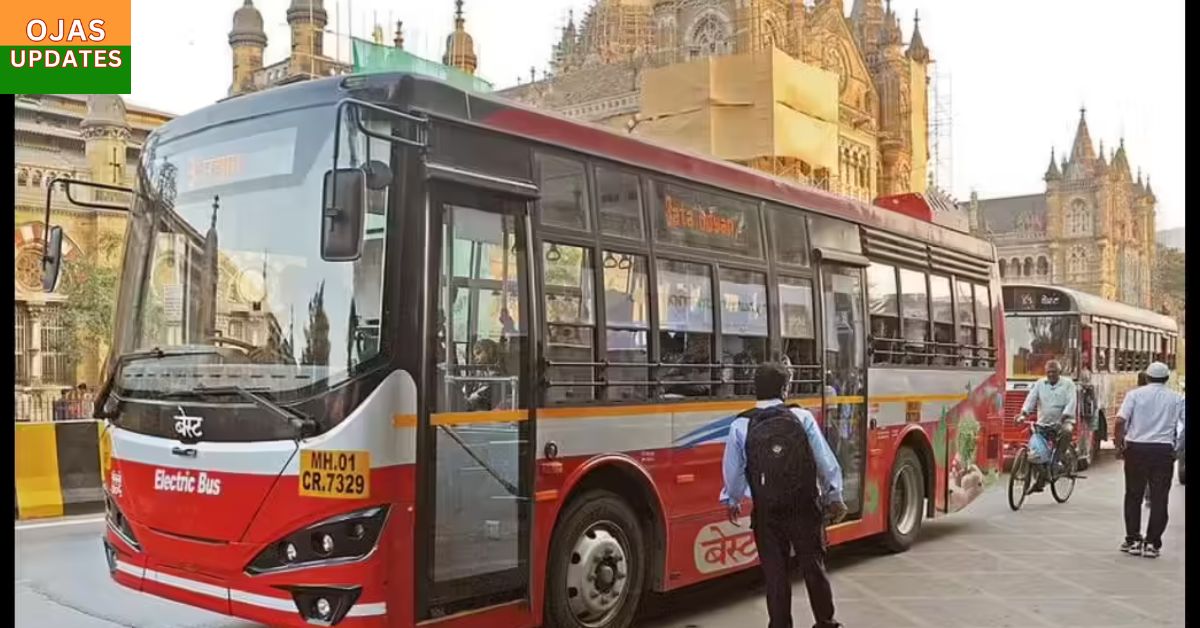
Mumbai’s public transport system is the lifeline of the city, carrying millions daily across its sprawling urban landscape. Yet, commuters often face overcrowding, long waits, and inconsistent service. In response, the Mumbai Mobility Forum (MMF)—a think tank of transport experts—has demanded the procurement of 1,000 CNG AC buses for the Brihanmumbai Electric Supply and Transport (BEST) undertaking. This proposal comes at a critical juncture, as BEST grapples with balancing electrification goals against immediate commuter needs.
📈 Why the Demand Now?
The demand for CNG buses is rooted in both economic and operational realities:
- Fare Hike Revenue: A recent fare hike doubled minimum ticket prices, generating an additional ₹1 crore daily for BEST. MMF argues this surplus should be reinvested in expanding the fleet.
- Cost Advantage: Each CNG bus costs less than ₹1 crore, significantly cheaper than electric buses, which often cost double.
- Immediate Relief: Procuring CNG buses quickly can reduce waiting times, improve frequency, and alleviate overcrowding.
🚙 The Case for CNG AC Buses
MMF’s proposal emphasizes practicality over idealism:
- Underutilized Infrastructure: Mumbai already has a robust CNG fueling network, which risks being underused as BEST shifts toward full electrification.
- Cleaner Alternative: While not zero-emission, CNG buses are far cleaner than diesel, offering a transitional solution until EV adoption scales.
- Passenger Comfort: AC buses are in demand, especially during Mumbai’s humid summers, making them more attractive to commuters.
- Operational Flexibility: CNG buses can be deployed faster than e-buses, which require charging infrastructure and longer lead times.
📊 Comparative Snapshot
| Factor | CNG AC Buses | Electric Buses | Notes |
|---|---|---|---|
| Cost per bus | ~₹2 crore | CNG cheaper upfront | |
| Infrastructure | Existing CNG pumps | Charging infra still scaling | CNG ready-to-use |
| Emissions | Lower than diesel | Zero tailpipe | EVs cleaner long-term |
| Deployment Speed | Faster | Slower | EV rollout requires setup |
| Passenger Comfort | AC available | AC available | Both meet commuter needs |
🌍 Balancing Sustainability and Practicality
BEST has ambitious plans to electrify its entire fleet, but MMF warns against ignoring short-term commuter needs:
- Electrification Challenges: Charging infrastructure is still limited, and e-buses face higher upfront costs.
- CNG as a Bridge: Procuring 1,000 CNG buses provides immediate relief while keeping long-term electrification goals intact.
- Public Trust: Improving service frequency and comfort now can rebuild commuter confidence in BEST.
⚖️ Risks and Challenges
While the proposal is pragmatic, challenges remain:
- Policy Alignment: BEST’s electrification roadmap may conflict with large-scale CNG procurement.
- Environmental Trade-off: CNG is cleaner than diesel but not as sustainable as electric.
- Financial Management: BEST must ensure fare hike revenues are transparently reinvested.
- Fleet Integration: Balancing CNG and EV fleets requires careful planning to avoid inefficiencies.
🏁 Conclusion
The Mumbai Mobility Forum’s demand for 1,000 CNG AC buses highlights the tension between long-term sustainability and immediate commuter needs. While BEST’s electrification vision is commendable, the city’s commuters cannot wait years for relief. CNG buses offer a cost-effective, quick-to-deploy solution that leverages existing infrastructure and improves passenger comfort.
In a city where public transport is the heartbeat of daily life, this proposal is not just about buses—it’s about restoring trust, reducing stress, and making Mumbai’s transit system more humane. The challenge for BEST lies in striking the right balance: investing in the future while delivering for the present.