
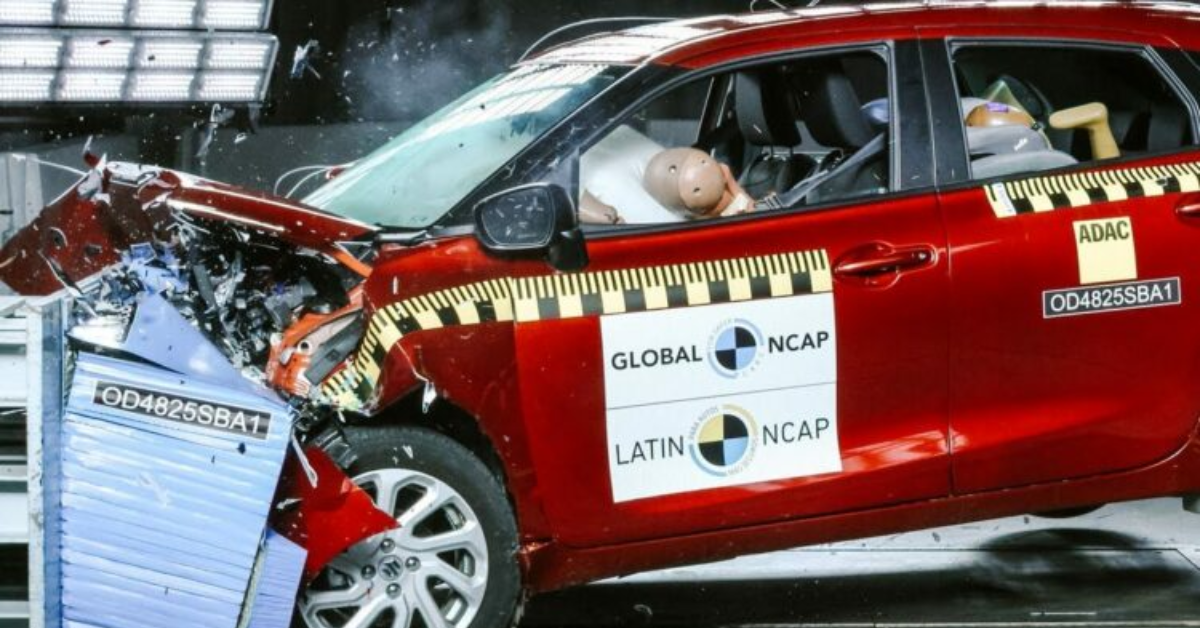
The Maruti Suzuki Baleno, one of India’s most popular hatchbacks, has recently come under the spotlight for safety reasons. The vehicle, made in India, received a 2-star rating in the Latin NCAP crash tests — raising concerns among buyers regarding occupant protection and structural integrity.
The Latin NCAP (New Car Assessment Program) is a recognized authority in vehicle safety testing. Their evaluations provide an insight into how cars perform in real-world crash scenarios, helping buyers make informed decisions. In this blog, we analyze what the Baleno’s 2-star rating means, the test details, safety features, and implications for Indian buyers.
Understanding the Latin NCAP Rating
Latin NCAP evaluates vehicles across multiple parameters:
- Adult Occupant Protection (AOP)
- Child Occupant Protection (COP)
- Safety Assist Technologies
A 2-star rating indicates below-average protection in critical crash scenarios. While the car may prevent some injuries, there are significant risks for both adult and child occupants in high-impact collisions.
Crash Test Highlights
The Latin NCAP crash tests typically include:
- Frontal impact at 64 km/h
- Side impact simulations
- Assessments of structural integrity
- Evaluations of seatbelt and airbag effectiveness
In the case of the Maruti Suzuki Baleno, the 2-star rating suggests that while the vehicle’s airbags and seatbelts provided some protection, the body structure and overall crashworthiness were not adequate to ensure high-level safety.
Safety Features of the Baleno
The Indian-made Baleno is equipped with several standard safety features, including:
- Dual front airbags (driver and passenger)
- Anti-lock Braking System (ABS) with Electronic Brakeforce Distribution (EBD)
- Rear parking sensors
- Seatbelt reminders
- ISOFIX child seat anchorages
However, despite these features, the low Latin NCAP rating highlights that passive safety (how well the structure protects occupants in a crash) remains a concern.
Why the Rating Matters for Indian Buyers
India has seen a growing awareness about vehicle safety, with buyers increasingly considering safety ratings alongside price, mileage, and features. The Baleno’s 2-star score raises some key points for prospective buyers:
1. Structural Integrity
A low score indicates that the vehicle’s body may deform excessively in severe crashes, posing higher injury risks.
2. Child Safety
Even with ISOFIX anchors, the crash test suggests potential dangers for child occupants, emphasizing the need for careful use of child seats.
3. Comparison with Rivals
Competitors in the hatchback segment, such as the Hyundai i20 and Honda Jazz, have generally performed better in crash tests. Buyers may now compare safety ratings more seriously before making a decision.
What Maruti Suzuki Could Do Next
To enhance safety, Maruti Suzuki could consider the following upgrades:
- Reinforced chassis and crumple zones for better crash absorption
- Additional airbags (side and curtain)
- Advanced driver-assist systems such as Electronic Stability Control (ESC)
- Improved seatbelt pre-tensioners and load limiters
Such improvements could raise the Baleno’s global safety ratings and reassure buyers concerned about crash protection.
Safety vs. Affordability
Maruti Suzuki has always positioned the Baleno as a value-for-money hatchback, emphasizing fuel efficiency, features, and reliability. However, the low crash test score highlights a trade-off between affordability and advanced passive safety features.
For buyers, this serves as a reminder that price alone should not dictate purchase decisions. Safety must also be a priority, especially in a country like India where road accidents are a leading cause of fatalities.
Global Safety Perspective
While the Baleno performs reasonably well in Indian safety standards, global benchmarks are stricter. Latin NCAP ratings provide an international perspective on how Indian-made cars would fare in developed markets. A 2-star rating sends a cautionary signal to consumers and regulators alike.
Impact on Buyer Confidence
The news of the 2-star rating is likely to affect:
- Prospective Baleno buyers considering safety as a key factor
- Used car buyers, who may reevaluate risk in older models
- Brand perception, especially for buyers prioritizing global standards
While Maruti Suzuki remains a trusted brand, addressing safety shortcomings is essential for maintaining consumer confidence in the competitive hatchback market.
Tips for Buyers Considering the Baleno
- Check Safety Features Carefully: Ensure the variant chosen includes all standard safety features, especially airbags and ISOFIX anchors.
- Use Child Seats Properly: Parents should ensure correct installation and use of child safety seats.
- Drive Safely: Low crash-test ratings mean cautious driving is even more important.
- Consider Alternatives: Evaluate rivals with higher safety ratings if crash protection is a priority.
Conclusion
The Maruti Suzuki Baleno’s 2-star Latin NCAP rating highlights the importance of vehicle safety in the modern era. While it remains a popular, feature-rich, and reliable hatchback, prospective buyers need to consider structural crashworthiness alongside performance, mileage, and affordability.
This rating should encourage both manufacturers and consumers to prioritize safety features and engineering. For Maruti Suzuki, improving the Baleno’s passive and active safety systems could enhance global competitiveness and ensure that this iconic hatchback meets the highest safety expectations.
For Indian buyers, the takeaway is clear: never compromise on safety, even in the pursuit of affordability and fuel efficiency. As awareness grows, the next generation of Baleno buyers will increasingly demand vehicles that offer both style and substantial crash protection.